Room-by-Room Inventory Inspections for Epsom HMOs: Compliance & Safety Checks
HMO inventory Epsom compliance explained for landlords and agents. Learn what a thorough room-by-room report must cover to satisfy councils, insurers and deposit schemes.
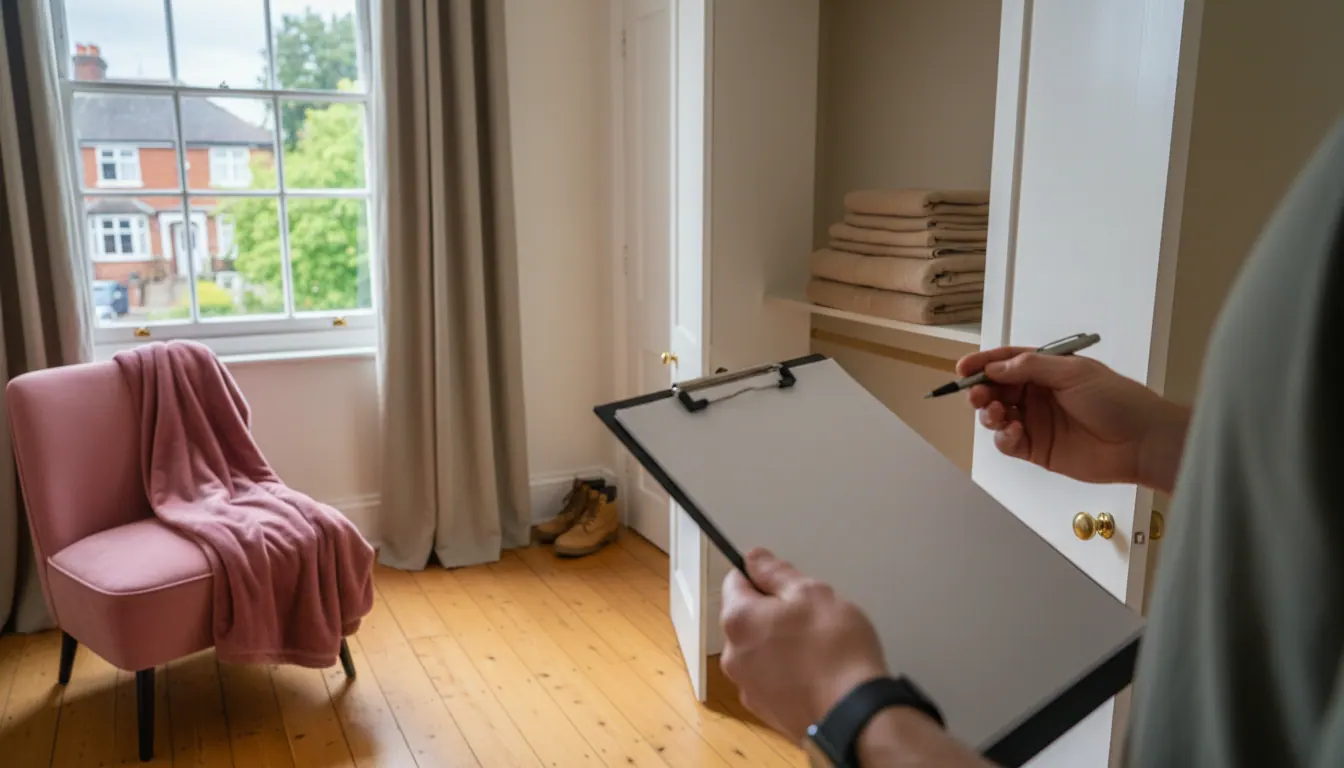
Why HMO Compliance in Epsom Starts With the Inventory
Running a house in multiple occupation in Epsom is not like letting a standard family home. The rules are stricter, the wear is heavier, and the paper trail has to be watertight from day one. Councils, deposit schemes and insurers all want evidence. An HMO inventory is where that evidence begins.
We work with landlords across Epsom and the surrounding area who let rooms to commuters catching the fast train into London, hospital staff at Epsom and St Helier, and young professionals who want affordable, flexible accommodation close to the town centre. These are busy, high-turnover properties. Get the inventory wrong, and the costs pile up quickly.
What Makes an HMO Inventory Different From a Standard Let
A single-tenancy inventory covers the whole property under one agreement. An HMO inventory is more complex. Each room is effectively its own letting unit, with its own condition record, its own photographic evidence, and its own check-in and check-out process. Shared spaces, such as kitchens, bathrooms and hallways, need to be documented separately and referenced clearly so every tenant understands their responsibility.
Here is what a thorough HMO inventory for an Epsom property needs to cover:
- Each individual room documented with written condition notes and dated photographs, covering walls, floors, ceiling, fixtures, fittings, furniture and any appliances.
- Shared spaces recorded as a separate section, noting condition at the start of each new tenancy cycle and updated when individual occupants change.
- Keys and access devices listed per room, including any key fob or coded entry systems, which are increasingly common in converted properties around the town centre.
- Meter readings taken at each check-in and check-out, especially important where bills are included in the rent.
- Safety equipment noted and photographed, including smoke alarms, carbon monoxide detectors and fire doors. This is not a safety inspection as such, but recording the presence and condition of these items at the outset protects you if questions arise later.
- Cleanliness standards described in enough detail that they can be used as a benchmark at check-out.
A quick video walkthrough or a basic template filled in by the landlord simply does not provide this level of detail. We have seen too many cases where a landlord has tried to handle this themselves, only to find the deposit scheme rules against them because the evidence was too vague or the photographs were undated.
Epsom's HMO Stock: What We Actually See on the Ground
Epsom has a varied housing stock. Victorian terraces in the streets around the station, 1930s semis further out towards Ewell, and some larger detached properties that have been converted into licensed HMOs. Each type comes with its own common issues.
Older properties tend to show damp in ground-floor rooms and around single-glazed windows. Shared kitchens in converted houses often show accelerated wear to worktops and flooring. Carpets in communal hallways can deteriorate quickly when six or more people are using them daily.
Documenting these issues accurately at the start of a tenancy is critical. If we note at check-in that the hallway carpet has a worn patch near the front door, that detail cannot be used against a tenant at check-out. But if a tenant causes a burn or a tear in an area that was previously recorded as good condition, the evidence is there.
This is exactly the kind of dispute that ends up in front of a deposit adjudicator. You can read more about how these cases play out locally in our article on Common Deposit Disputes in Epsom Rentals: What Landlords Actually Win.
Staying Compliant: Mid-Term Inspections for Room-by-Room Lets
An HMO licence from Epsom and Ewell Borough Council comes with conditions. Regular property inspections are one of them. A mid-term inspection report from an independent inventory company carries far more weight than a landlord's own notes, because it is impartial.
We carry out mid-term inspections for HMO landlords across Epsom that serve several purposes at once:
- Identifying maintenance issues before they become costly, such as early signs of damp or a failing extractor fan in a shared bathroom.
- Checking that the property is not being overcrowded beyond its licensed capacity.
- Creating a dated, written record that demonstrates proactive management, which is useful if the council ever queries your licence compliance.
- Flagging any cleanliness or condition issues with individual tenants before they escalate into deposit disputes at the end of the tenancy.
For landlords who are self-managing a property while also working full time, these inspections take a significant burden off their shoulders. We produce a clear, professional report that you can act on immediately.
What Letting Agents in Epsom Expect From an HMO Report
The established letting agents on and around the High Street handle a mix of property types, and many of them manage HMOs on behalf of landlords. They have seen every kind of inventory report, and they know the difference between one that will hold up in a dispute and one that will not.
What they consistently tell us they need is:
- Consistent formatting across every room, so nothing is overlooked.
- High-quality, dated photographs that are clearly referenced to the written notes.
- Fast turnaround, because void periods between room lets are costly.
- A report that covers the shared areas in a way that can be updated when one tenant leaves and another moves in, without having to commission an entirely new document.
Our digital reports are structured to meet exactly these requirements. Because we are independent and have no commercial relationship with either the landlord or the tenant, our reports carry authority. That independence matters when a dispute reaches a deposit scheme adjudicator.
What One of Our Long-Standing Clients Says
We have worked with many landlords and agents across Epsom over the years, and the feedback we value most is from people who have actually tested our reports in a real dispute. Matt, who has been using us for many years, put it plainly:
I have been using Coopers Inventory Services for many years and I would never use anyone else. The reports are extremely thorough that they leave no room for discrepancy. Lisa and her team are super reliable, very friendly and professional at all times. The reports are always turned around quickly and I have always won claims because of good inventory and check out reports. 110 percent recommend!
Matt Singh, 5-star review
"Always won claims because of good inventory and check out reports." That is the point. An inventory is not just a formality. It is the document that determines whether you recover the cost of damage or absorb it yourself.
HMO Inventories and Deposit Scheme Requirements
All tenancy deposits in England must be protected in a government-approved scheme. When a dispute is raised, the adjudicator reviews the evidence submitted by both sides. A professional, independent inventory is the single most important piece of evidence a landlord can provide.
For HMOs, the stakes are higher because there are multiple deposits and multiple potential disputes running simultaneously. If one tenant disputes a charge relating to a shared kitchen and you have no clear record of its condition at the start of their tenancy, you are unlikely to succeed.
We are familiar with what the main deposit schemes look for, and we write our reports with that standard in mind. Our check-out reports compare condition directly against the check-in record, noting fair wear and tear separately from damage, and referencing photographs throughout.
If you are new to letting an HMO in Epsom and want to understand how the wider multi-area picture works, our article on Inventory Services Across Epsom, Oxted and Kenley: Multi-Area Coverage Explained gives a useful overview.
Frequently Asked Questions
Do I need a separate inventory for each room in an Epsom HMO? Yes. Each room should have its own condition record and photographic evidence, tied to the individual tenant's agreement. Shared areas are documented separately and updated each time the occupancy changes. This is the only approach that gives you clean, usable evidence if a dispute arises over a specific room.
Does an HMO inventory help with council licence compliance in Epsom? It does not replace the formal licensing requirements set by Epsom and Ewell Borough Council, but a detailed inventory and a programme of mid-term inspection reports demonstrate that you are managing the property responsibly. This can be relevant if the council ever reviews your licence or receives a complaint.
How often should a mid-term inspection be carried out in an HMO? For most HMOs, once every six months is a reasonable minimum. High-turnover properties, or those where there have been previous issues, may benefit from quarterly visits. We can advise on a schedule that suits your specific property.
What happens to the shared-area inventory when one tenant in an HMO moves out? When a room changes hands, we recommend a room check-out and a fresh room check-in for the new occupant, along with an updated record of the shared areas at that point. This keeps the evidence clean and prevents disputes about who caused damage in communal spaces.
Get in Touch
If you manage an HMO in Epsom and want to make sure your inventories are genuinely fit for purpose, we are happy to talk it through. With over 20 years of experience serving landlords and agents across this area, we know exactly what these properties need.
Call us on 01883 592204 and we will arrange a visit at a time that suits you.