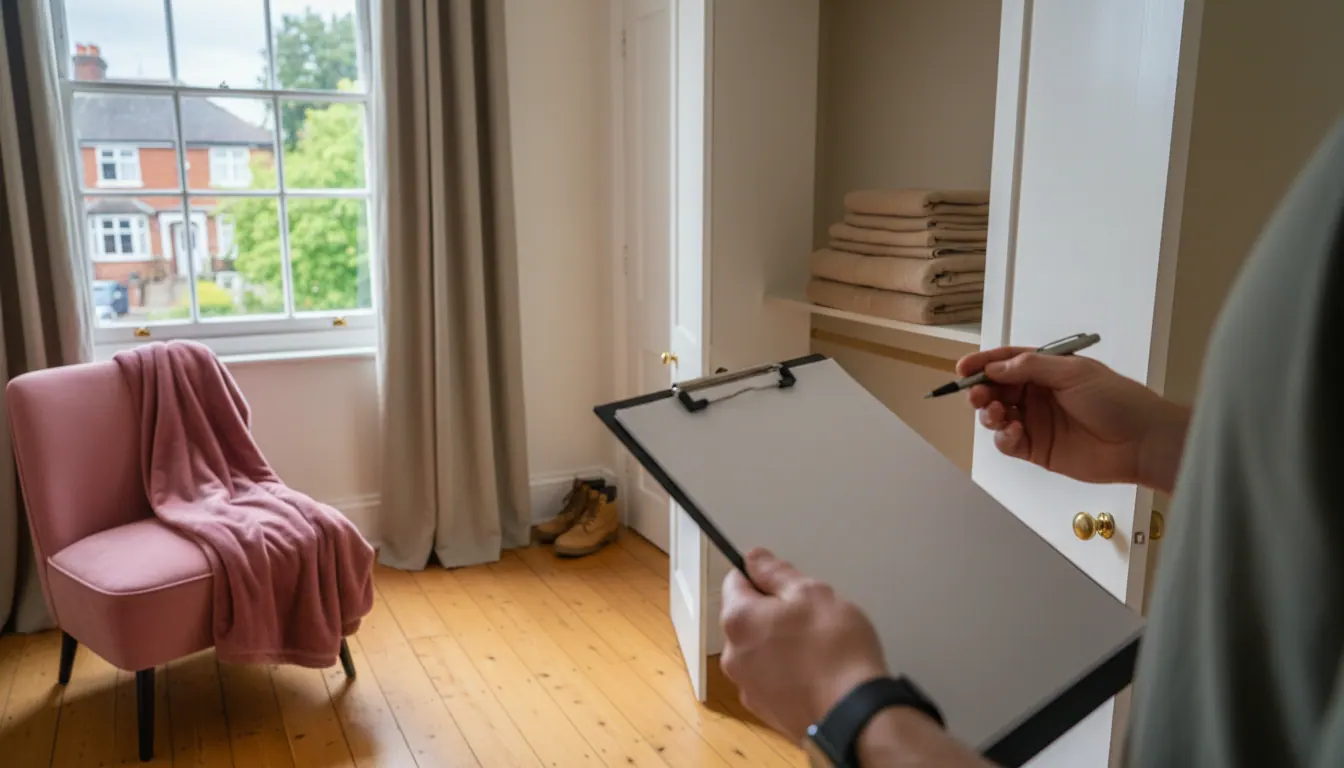
Common Deposit Disputes in Epsom Rentals: What Landlords Actually Win
Facing a deposit dispute in Epsom? Find out how a professional inventory from Coopers can protect landlords and tenants from costly end-of-tenancy disagreements.

Deposit Disputes in Epsom Are More Common Than Most Landlords Expect
Renting out property in Epsom is genuinely rewarding, but end-of-tenancy disputes over deposits remain one of the most stressful and time-consuming problems a landlord can face. We have been providing professional inventory services to landlords, letting agents and tenants across Epsom and the surrounding area for over 20 years, and the patterns we see are consistent. The disputes that end up at adjudication are almost always the ones where the paperwork was thin, inconsistent or simply missing.
This article explains what actually drives deposit disputes in Epsom rentals, what the deposit protection schemes look for when adjudicating, and how a thorough, independent inventory report makes the whole process far simpler, fairer and less expensive for everyone involved.
What Causes Most Deposit Disputes in Epsom Rentals?
Epsom has a varied rental stock. You have Victorian terraces and Edwardian semis in and around the town centre, 1930s semis across Ewell, purpose-built flats close to the station, and a growing number of HMOs catering to commuters, hospital staff from Epsom and St Helier, and young professionals.
Each property type brings its own common friction points at the end of a tenancy. From our experience across this market, the disputes we see most frequently involve:
- Scuffed or scratched wooden floors in town centre flats and period properties. Solid wood and engineered wood floors are expensive to repair, and without a clear, dated record of their condition at check-in, a deduction claim becomes almost impossible to defend.
- Pet damage in Ewell houses. Claw marks on skirting boards, staining on carpets and odour are all areas where landlords make deductions. Adjudicators want to see photographic evidence of the pre-tenancy condition alongside clear evidence of the damage at check-out.
- Mould and damp in shared HMOs. This is a particularly contested area. Adjudicators will not automatically award a landlord a deduction for mould if there is any suggestion the property had pre-existing damp issues or inadequate ventilation. A check-in report that records the exact condition of walls, ceilings and extractor fans at the start of the tenancy is essential.
- Cleaning disputes. Arguably the single most common cause of deposit deductions across the whole industry, and Epsom is no different. "Left in the same condition as found" sounds simple, but without a detailed baseline it is almost impossible to prove.
- Fair wear and tear misunderstandings. Many landlords are surprised to learn that adjudicators apply a strict interpretation of fair wear and tear. A scuff on a wall in a property occupied for three years by a single professional is treated very differently from the same scuff in a property occupied for six months. The length of tenancy, the number of occupants and the original condition all matter, and all need to be documented.
Why DIY Inventories Let Epsom Landlords Down
We understand why self-managing landlords in Epsom and Ewell attempt their own inventories. It feels straightforward: walk around the property, take some photos on your phone, maybe record a short video. The problem is that this approach almost never holds up when a dispute reaches a deposit scheme adjudicator.
There are a few reasons for this.
First, a video or a set of unstructured photos does not constitute a room-by-room written record. Adjudicators expect a methodical report, with each room described systematically, each item of furniture or fixture noted, and the condition described in neutral, factual language. A video that pans quickly across a room, or a folder of photos without labels or timestamps, provides very little evidential weight.
Second, a self-prepared inventory is inherently open to challenge. When a landlord prepares their own inventory, a tenant can argue (often successfully) that the document is biased. An independent, professionally prepared report carries far more weight precisely because neither party prepared it.
Third, the detail matters enormously. We regularly see landlords lose deposit disputes not because the damage did not occur, but because the check-in report did not describe the item in question at all, or described it only vaguely. "Carpet in good condition" is not the same as "carpet showing light wear to threshold strip, no staining, no damage to pile."
What a Professional Inventory Report Covers (and Why It Matters for Epsom Properties)
Our reports are thorough, consistent and produced to a standard that deposit scheme adjudicators and letting agents across Epsom are familiar with. A full check-in inventory from us will cover:
- A detailed, room-by-room written description of every surface, fixture and fitting
- Condition ratings with clear, factual language (not vague terms like "fair" or "okay")
- Dated, high-resolution photographs cross-referenced to the written description
- Meter readings, key counts and alarm checks
- A schedule of any pre-existing damage, clearly noted so there is no ambiguity at check-out
- Tenant sign-off, giving both parties a shared agreed baseline
When we carry out a check-out report at the end of the tenancy, we compare it directly against the check-in inventory. Any changes are documented with the same level of detail. That comparison is what a deposit scheme adjudicator needs to make a fair decision.
Mid-Term Inspections: Particularly Useful for Epsom HMOs and Room-by-Room Lets
A number of landlords in Epsom let properties on a room-by-room basis, particularly those near the town centre and close to Epsom and St Helier University Hospitals NHS Trust. This type of letting arrangement brings specific challenges. Tenants may move in and out of individual rooms while the property continues to be occupied, making it difficult to establish a clear record of condition for each room at each change of occupancy.
Mid-term inspections help significantly here. We can visit the property during a tenancy to document the current condition, flag any maintenance issues that need addressing, and create a contemporaneous record that sits between the check-in and check-out reports. For landlords managing HMOs, this is also useful from a compliance perspective: a mid-term inspection report can record the condition of fire doors, smoke alarms and communal areas, providing a clear paper trail for licensing purposes.
What Deposit Scheme Adjudicators Actually Look For
All three UK deposit protection schemes (the Deposit Protection Service, MyDeposits and the Tenancy Deposit Scheme) use adjudicators who apply similar principles when reviewing disputes. Understanding what they look for helps explain exactly why a professional inventory is so valuable.
Adjudicators want:
- A clear, dated check-in inventory that was provided to the tenant at the start of the tenancy and, ideally, signed or acknowledged by them.
- A check-out report that makes a direct, item-by-item comparison with the check-in inventory.
- Photographic evidence that is clearly labelled, dated and cross-referenced to the written report.
- Evidence of fair wear and tear consideration. A claim that ignores the length of the tenancy or the age of the item at the start of the tenancy is likely to be reduced or rejected.
- Neutral, professional language. Reports that read as though they were written by someone with a financial interest in the outcome are treated with scepticism.
An independent inventory from us satisfies all of these requirements. That is not an accident: it is the result of over 20 years of producing reports that are used in exactly these situations.
Frequently Asked Questions About Deposit Disputes in Epsom
Q: Do I legally have to have a professional inventory as an Epsom landlord?
There is no legal requirement to use a professional inventory company. However, if you want to make a deposit deduction and the tenant disputes it, the burden of proof is on you as the landlord. Without a thorough, independent inventory, that burden is very difficult to meet. Adjudicators will not make assumptions in your favour.
Q: My tenant has left the property in a worse state than when they moved in. Can I keep the whole deposit?
Not automatically. You can only deduct an amount that reflects the actual cost of putting the property back to the condition recorded at check-in, adjusted for fair wear and tear. You will need evidence (the check-in inventory, the check-out report, and ideally quotes or invoices for the work) to support your claim. Without a professional check-in inventory, this becomes very difficult.
Q: How long does a deposit dispute adjudication take?
Adjudication timescales vary between schemes, but most decisions are issued within 28 days of all evidence being submitted. The process is free to use and is designed to avoid the need for court proceedings.
Q: I manage several properties in Epsom and Ewell. Can Coopers handle multiple check-ins and check-outs in the same area?
Yes. We work regularly with landlords and letting agents managing portfolios across Epsom, Ewell and the wider Surrey area. We are familiar with the local property types and the expectations of local letting agents, which means our reports are produced efficiently and to a consistent standard across all your properties.
Protect Your Epsom Rental Investment With the Right Documentation
A deposit dispute is stressful, time-consuming and often avoidable. The landlords who come to us after losing an adjudication almost always say the same thing: they wish they had invested in a proper inventory at the start. The cost of a professional check-in report is a fraction of the cost of a disputed deposit, a damaged landlord-tenant relationship, or a void period while a dispute is resolved.
We cover Epsom, Ewell, and the surrounding Surrey area, and we have been doing so for over two decades. Our reports are clear, thorough, independent and produced to a standard that holds up when it matters most.
If you would like to discuss your requirements or book an inventory, call us on 01883 592204. We are always happy to talk through what you need.